

Seawalls
A seawall (sometimes written as “sea wall”) is a shoreline protection structure built to hold back soil and resist the forces of moving water. It creates a strong separation between upland ground and the waterline, helping prevent erosion, washouts, and property damage caused by daily tides, boat wake, and major weather events.
For waterfront homeowners and commercial property managers, a seawall is more than a wall. It is a load-bearing system that protects land, supports safe access to the water, and helps preserve the long-term usability and value of the shoreline.
A seawall is an engineered barrier installed along the shoreline to retain upland soils and reduce shoreline erosion by resisting wave action, currents, and storm-driven water movement.
Why Seawalls Matter on the Gulf Coast
On the Florida Gulf Coast, shorelines deal with shifting soils, saltwater exposure, and repetitive wave energy. Over time, that movement can pull soil out from behind the shoreline, creating voids, sinkholes, and unsafe edges near docks, decks, and yards.
A properly built seawall helps:
- Reduce erosion and soil loss along the shoreline
- Protect structures and utilities near the water’s edge
- Maintain usable yard space and a cleaner shoreline profile
- Improve safety by stabilizing the transition between land and water
- Create a more functional waterfront for docks, lifts, and marine access
Do it once. Do it right. Call SeaByrd and we will get it right the first time. Proudly serving Panama City, Florida, and surrounding areas
Seawall vs Bulkhead: What is the Difference?
These terms are often used interchangeably, but there is a practical difference:
A properly built seawall helps:
Seawalls
Are generally designed to handle "higher-energy water conditions" such as waves and surge. They are commonly used where shoreline exposure is more severe.
Bulkheads
Are typically used in "calmer, more protected waters" and are often focused on "retaining soil" rather than resisting heavy wave impact.
The right choice depends on your shoreline exposure, water depth, soil type, existing structure, and local permitting requirements. A professional site evaluation is the fastest way to make the correct call.
Why Seawalls Matter on the Gulf Coast
On the Florida Gulf Coast, shorelines deal with shifting soils, saltwater exposure, and repetitive wave energy. Over time, that movement can pull soil out from behind the shoreline, creating voids, sinkholes, and unsafe edges near docks, decks, and yards.
A properly built seawall helps:
- Reduce erosion and soil loss along the shoreline
- Protect structures and utilities near the water’s edge
- Maintain usable yard space and a cleaner shoreline profile
- Improve safety by stabilizing the transition between land and water
- Create a more functional waterfront for docks, lifts, and marine access
The Anatomy of a Modern Seawall
A seawall is a system, not a single component. While every site is different, many seawall builds include:
01
Wall Structure (The Face)
This is the main vertical or near-vertical barrier separating land from water. Depending on site needs, it may be built using materials such as vinyl sheet piling, concrete, steel, or other engineered systems.
02
Cap (Top Beam)
The cap ties the wall together at the top and adds structural rigidity. It also creates a clean finished edge along the shoreline.
02
Tiebacks and Anchors (Stability System)
Tiebacks connect the wall to an anchor system buried inland. This is what helps the seawall resist leaning, sliding, or failing under soil pressure and water forces.
04
Drainage and Pressure Relief
Water builds pressure behind retaining walls. Proper drainage and pressure relief reduce the risk of blowouts, cracking, and premature failure.
05
Backfill and Site Restoration
Behind the wall, backfill material must be placed and compacted correctly to support the shoreline and prevent voids or settling over time.
Common Seawall Types Used in Florida Waterfront Construction
Different shorelines demand different solutions. Common seawall approaches include:
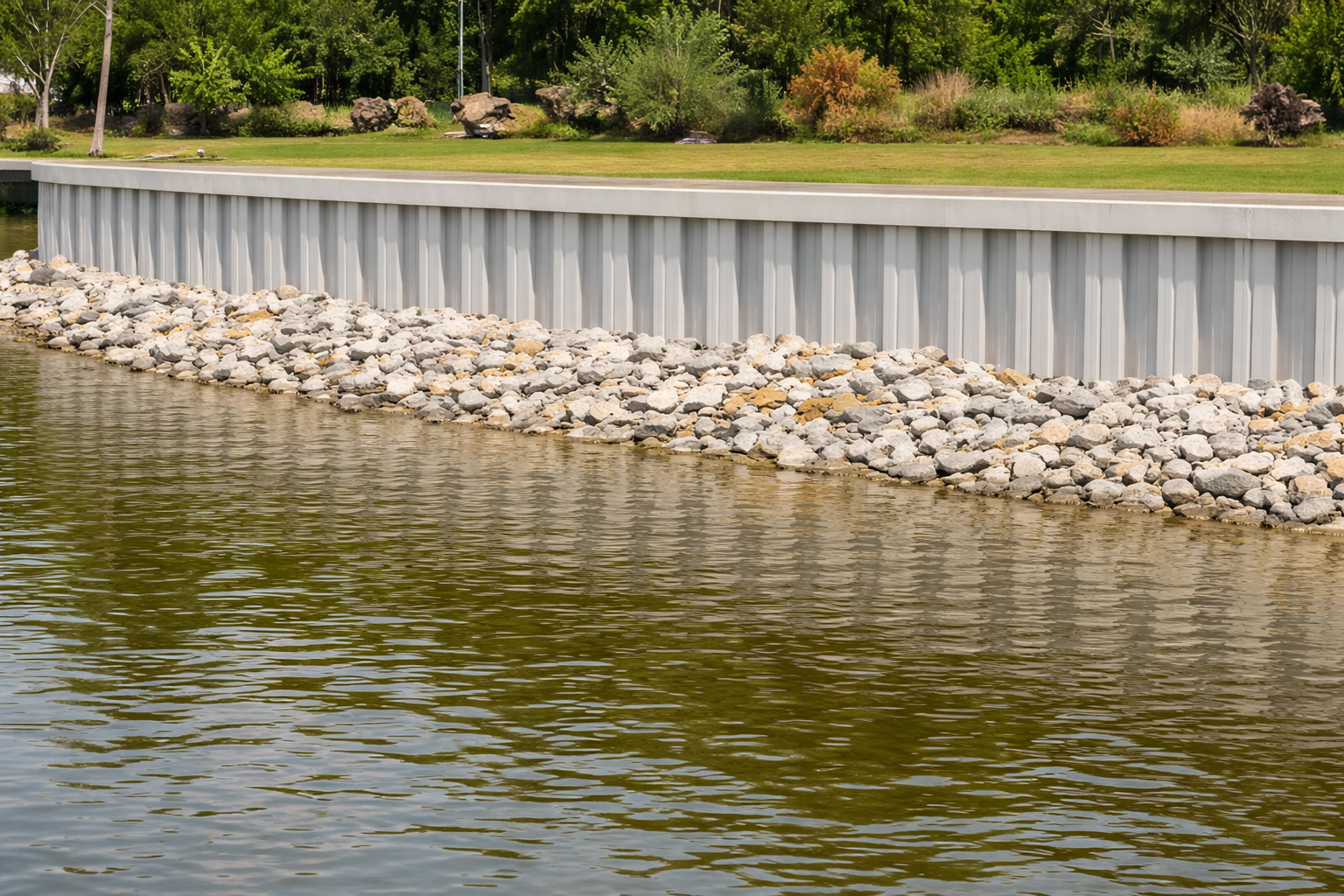
Vinyl Sheet Pile Seawalls
Popular for many residential shorelines due to corrosion resistance and long-term performance in saltwater environments.
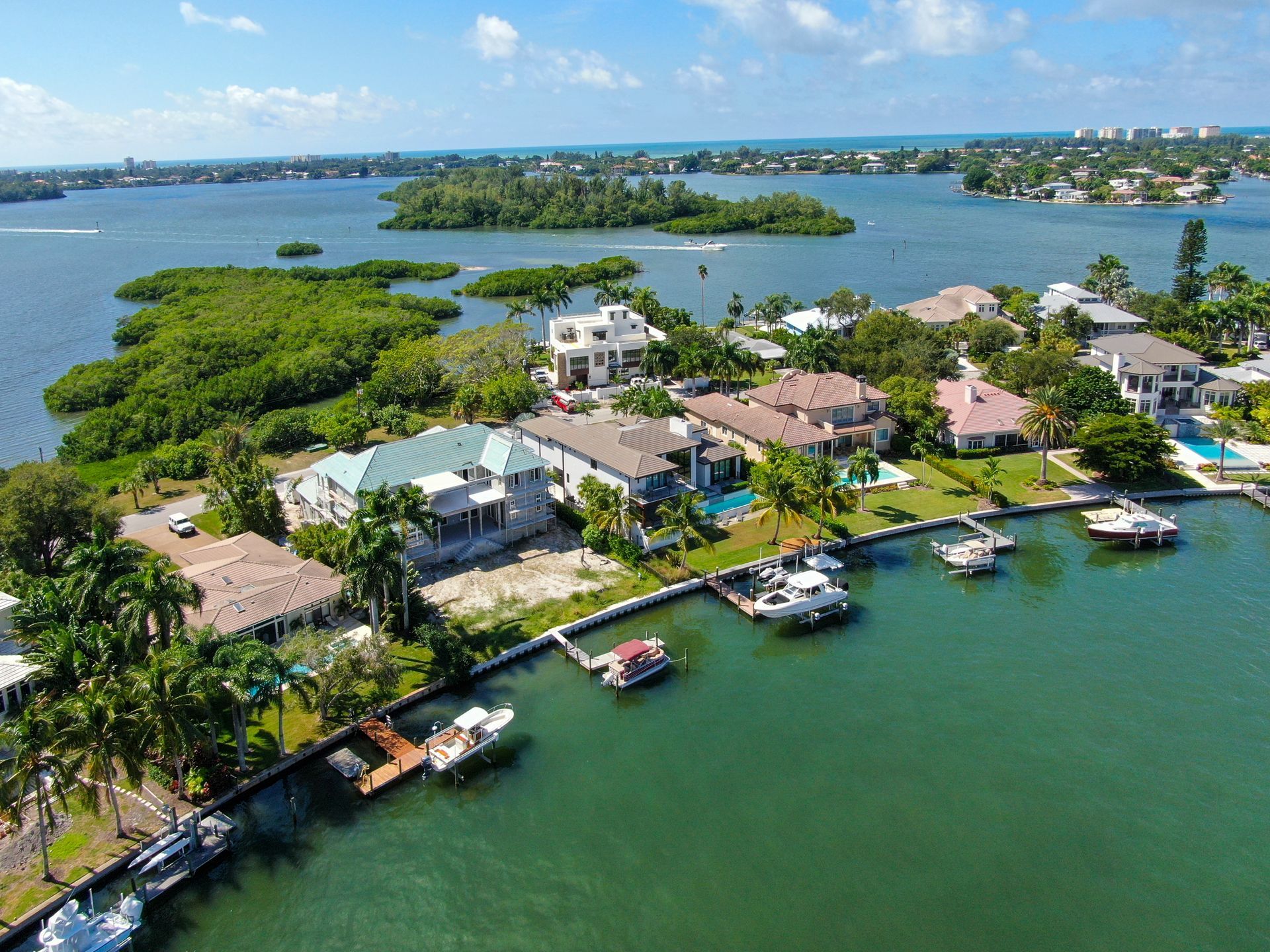
Concrete Seawalls
Often chosen for strength and stiffness, particularly in higher-load applications.
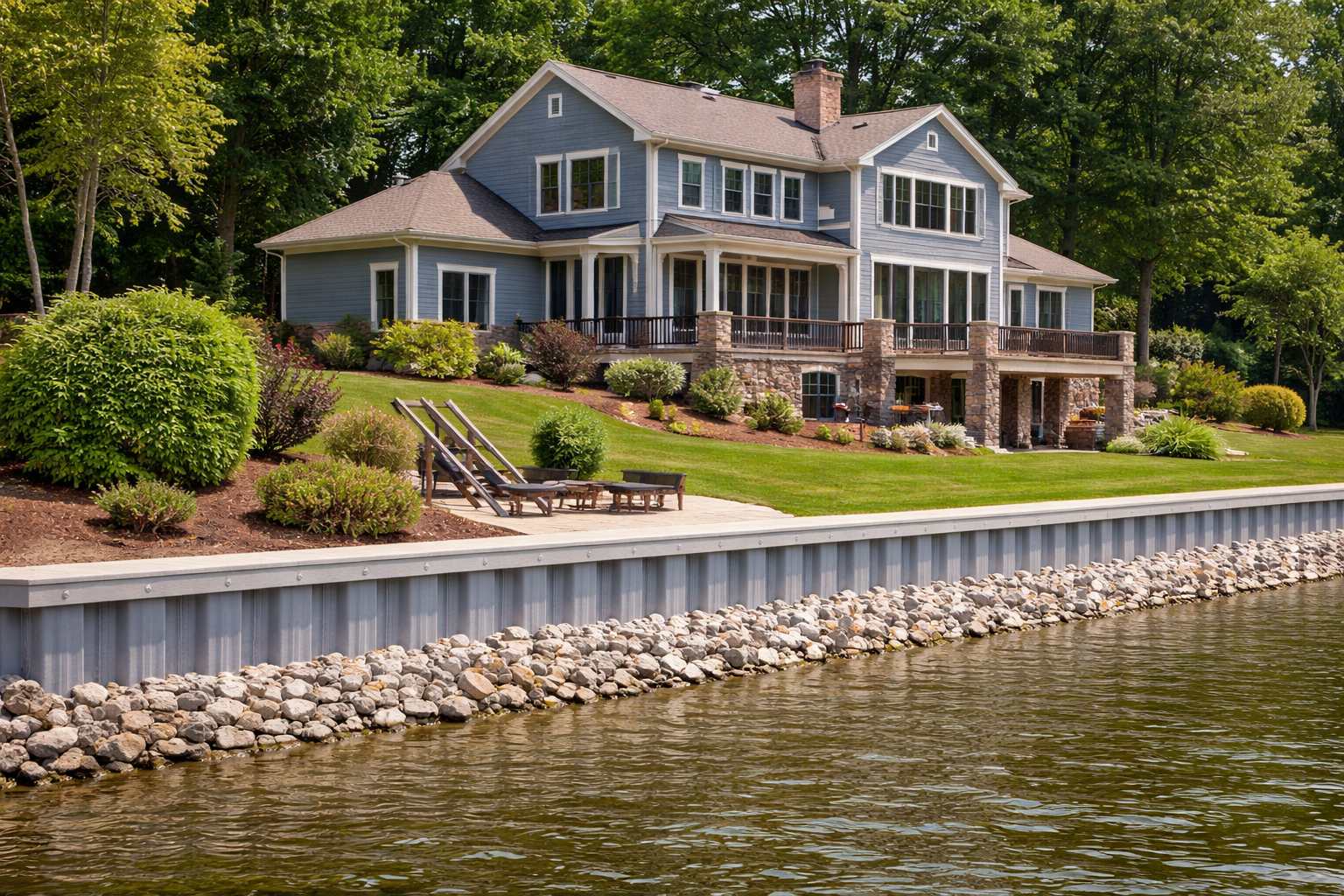
Steel Seawalls
Used in certain commercial or heavy-duty scenarios but require careful corrosion protection planning.
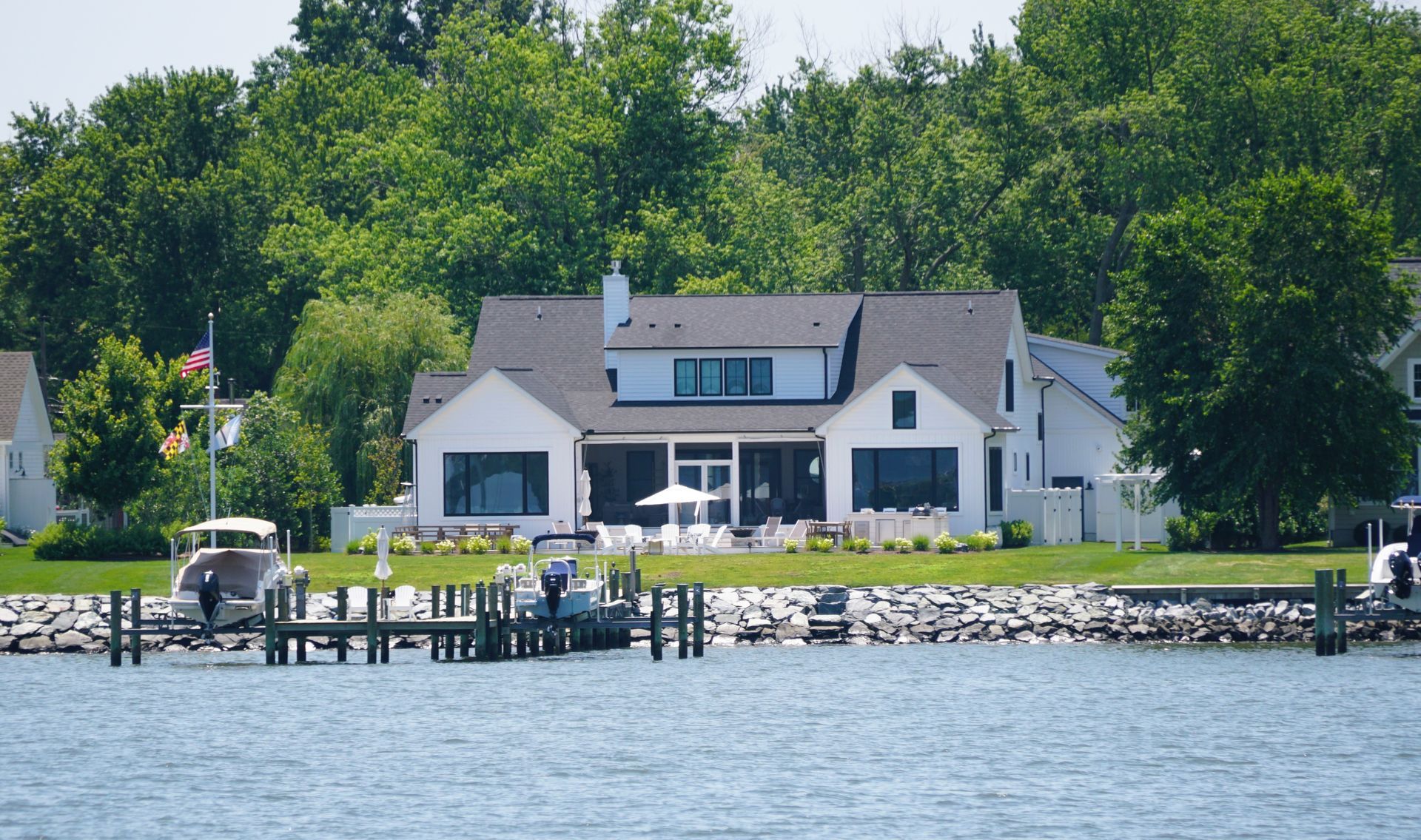
Riprap Revetments and Hybrid Systems
Sloped rock systems can dissipate wave energy and are sometimes used where a vertical wall is not the best fit.
Material selection should be based on shoreline exposure, soil conditions, required wall height, permitting constraints, and long-term maintenance goals.
Signs Your Seawall May Need Repair or Replacement
If you own waterfront property, it is worth watching for early warning signs. Addressing problems early can prevent larger failures later.
Common red flags include:
- Cracks, separation, or missing sections along the wall
- Leaning, bowing, or visible movement over time
- Sinkholes, voids, or depressions forming behind the seawall
- Soil washing out through seams, joints, or drainage points
- Rusted tie rods, failing caps, or rotting wood components (on older systems)
- Frequent overtopping or erosion at the base of the wall
If you see any of these, a professional inspection can determine whether you need targeted repairs, reinforcement, or full replacement.
The Anatomy of a Modern Seawall
A seawall is a system, not a single component. While every site is different, many seawall builds include:
Step 1
Site Evaluation
We review shoreline conditions, water exposure, access, soil behavior, and the current wall (if one exists). This is where we identify the real failure mechanism, not just the visible symptoms.
Step 2
System Recommendation and Scope
Based on your shoreline needs, we recommend the most appropriate approach and define a clear scope of work. No vague allowances. No mystery materials.
Step 3
Permitting Coordination
Marine construction often requires permits and regulatory compliance. We help coordinate the documentation and workflow so the project stays aligned with local and state requirements.
Step 4
Build and Install
Water builds pressure behind retaining walls. Proper drainage and pressure relief reduce the risk of blowouts, cracking, and premature failure.
Step 5
Final Walkthrough and Shoreline Cleanup
Behind the wall, backfill material must be placed and compacted correctly to support the shoreline and prevent voids or settling over time.
Sea Byrd Marine has served Florida’s Gulf Coast since 2012 and is fully licensed and insured. License numbers: CGC-1532336 | CCC-1334769.
Permits and Environmental Considerations
Seawalls are shoreline armoring structures, and many projects require permits depending on location, scope, and impacts. Requirements can vary by waterbody, county, and property type. Permitting is not a formality. It is how you avoid fines, stop-work orders, and future resale headaches.
If you are comparing solutions, it is also worth discussing nature-based options such as living shorelines for the right conditions. In some cases, hybrid approaches can provide both protection and environmental benefits.
Seawall Maintenance Tips
A seawall can last for decades, but only if it is treated like the structural system it is.
Best practices include:
- Inspect the top cap, seams, and shoreline edge at least once per year
- Watch for early voids or settling behind the wall
- Keep drainage paths clear so water pressure does not build up
- Address small separations early before they turn into washouts
- After major storms, perform a quick shoreline check for movement or undermining
If anything looks off, a professional inspection can help you catch issues before they become major repairs.
FAQ
Different shorelines demand different solutions. Common seawall approaches include:
How long does a seawall last?
Service life depends on materials, installation quality, site exposure, and maintenance. A well-built seawall system with proper anchoring and pressure relief can perform for decades.
Do I need a permit to build or repair a seawall?
Often yes. Many shoreline projects require review and approval depending on location and scope. The right way to find out is to evaluate the site and confirm the applicable requirements.
Is a seawall the best solution for every shoreline?
Not always. In lower-energy areas, other stabilization methods may be more appropriate. The best solution depends on your exposure, erosion pattern, property layout, and regulatory constraints.
What causes seawalls to fail?
Common causes include corrosion, inadequate anchoring, poor drainage (hydrostatic pressure), undermining at the base, and soil loss behind the wall.
Can you repair a seawall instead of replacing it?
In many cases, yes. If the wall structure is still viable, repairs or reinforcement may restore performance. If the wall is at end-of-life or structurally compromised, replacement is usually the safer long-term investment.
What should I do if I see sinkholes behind my seawall?
Treat it as urgent. Sinkholes often indicate soil loss and void formation, which can accelerate failure. An inspection can identify the cause and the right fix.
Ready to protect your shoreline?
If you are planning a new seawall, dealing with erosion, or unsure whether your existing wall is failing, Sea Byrd Marine can help you evaluate the site and choose the right solution.
Call us or request a quote through the contact form to schedule a seawall assessment.